RF & HIFU Skin Tightening Machines
Radio frequency and focused ultrasound for face lifting and skin tightening.
Machines
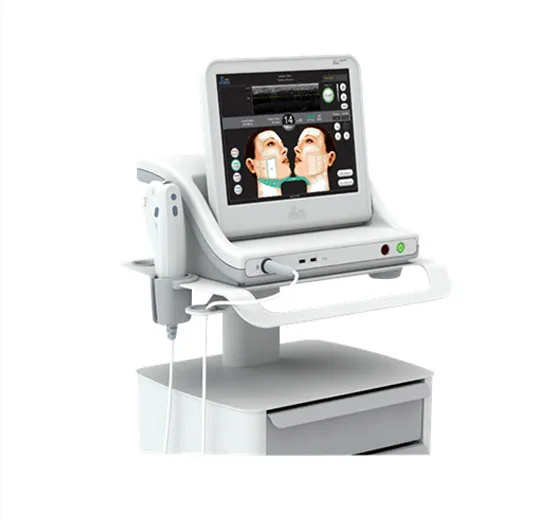 H01
HIFU Machine
High Intensity Focused Ultrasound for SMAS lifting at 1.5mm, 3.0mm and 4.5mm depths - a non-surgical facelift alternative.
View machine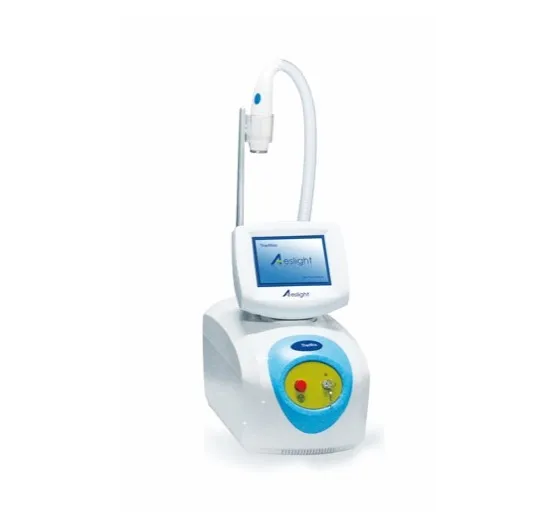 R01
RF Skin Tightening Machine
2.64MHz mono-polar and bi-polar radio frequency for skin firming, wrinkle reduction and body reshaping with contact cooling.
View machineWhich professional skin tightening machine suits your clinic first?
RF and HIFU are not competing versions of the same thing. They solve different client concerns. A professional skin tightening machine based on RF heats the dermis to contract existing collagen and stimulate new collagen over a course of sessions. HIFU focuses ultrasound to a precise depth, often the SMAS layer, creating a more immediate structural lift. Your first purchase should follow your client list. If your books are full of 45-plus clients asking about jowls and a sagging jawline, HIFU addresses that directly. If you see more clients asking for overall firmness, fine lines and texture, RF fits the repeat-visit model better.
Most UK clinics eventually carry both, because the indications only partly overlap. The question is which one pays for itself first, and our HIFU machine buying guide works through that same decision from the HIFU side. Look at what your front desk already gets asked to book.
How a professional skin tightening machine using RF works in a treatment room
RF current heats the dermis to around 45-65°C. It doesn't rely on tissue resistance. The main energy receptors are water molecules, which are abundant in skin. That makes heating fairly predictable across different skin types. The result is collagen contraction and a wound-healing response that leads to new collagen over weeks. From our device manuals, a dual-mode RF skin tightening machine with monopolar and bipolar handpieces lets you treat both superficial and deep concerns. Monopolar reaches deeper, bipolar heats faster and shallower. For a Tuesday-afternoon salon doing back-to-back faces, bipolar is often the workhorse. For body work or deep facial lifting, monopolar earns its keep.
There is one hard contraindication that must sit in your consultation form. Monopolar RF passes current through a large area, so it's absolutely not suitable for anyone with a cardiac pacemaker or an implanted cardioverter defibrillator (ICD). Other active implantable electronic devices, metal implants in the treatment area, pregnancy, active skin infection, broken skin, and clients who can't reliably feel heat (impaired skin sensation) all rule out treatment. You must screen for these explicitly. A generic 'any implants?' question isn't enough when the answer determines patient safety.
HIFU: what depth adds to a professional skin tightening machine
HIFU uses focused ultrasound to create thermal coagulation points at exact depths: 1.5mm, 3.0mm, and 4.5mm. The 4.5mm setting reaches the SMAS layer, the structure surgeons lift in a facelift. That's why HIFU is described as a non-surgical facelift alternative. Energy passes through the skin surface without injuring it, so there's no downtime from epidermal damage. From our technical documentation, the H01 HIFU system works across those three depths. Clients who want a visible lift after one session, particularly around the cheeks and jawline, are the core HIFU audience. The treatment is usually more expensive than RF per session, but fewer sessions may be needed for a noticeable result.
Compliance matters more than the gadget: MHRA status and local licences
Before you buy any professional skin tightening machine for use in Great Britain, you need to understand its regulatory status. The key is the manufacturer's stated intended purpose. If the device is claimed to have a medical purpose, it falls under UK MDR 2002. If it's purely aesthetic, it may not currently be covered by that regulation, though MHRA reform is ongoing. Don't assume. Ask the supplier three questions: Does the device carry a UKCA mark or a valid CE mark under MHRA's transition arrangements? Is the device registered with the MHRA and who is the UK Responsible Person? Will you provide a written Declaration of Conformity? Transition deadlines can change, so check MHRA's current guidance on the day you order. This isn't bureaucracy. It's the difference between treating a client and treating a legal problem.
You also need to check whether your specific council requires a special treatment licence. The picture is patchy. London boroughs may have powers under the London Local Authorities Act 1991. Outside London, only some councils have similar schemes. In Wales, the Public Health (Wales) Act 2017 covers special procedures, but the list is closed: acupuncture, body piercing, electrolysis, and tattooing. Facial treatments and fat reduction are not included. So the only reliable answer is to ask your own council. Don't rely on what a neighbouring clinic says, even in the same county.
Written risk assessments are a legal must under the Management of Health and Safety at Work Regulations 1999 if you employ five or more people. You should also keep records of equipment maintenance and operator training under PUWER 1998. And remember: any claims you put on your website or in adverts must be substantiated under the CAP Code before you run them. 'Results' wording is a claim. Never say 'acne removal', and don't say a result is 'permanent'.
What does a professional skin tightening machine actually cost to run in the UK?
You're buying more than a capital asset. Work out the full cost per treatment. The machine is usually a low-to-mid four-figure sum. Add VAT and import costs if you're buying outside the UK, plus delivery and any installation. Consumables vary: many RF devices use no disposables, which lowers running cost, but some HIFU cartridges have a shot limit. Training is another line: you'll need initial operator training and probably a refresher. Insurance premiums will reflect the technology and your staff qualifications. Then there's warranty and parts availability. If a handpiece fails, how quickly can the supplier get a replacement to your door? A machine that's out of action for three weeks costs you more than money.
Booking rhythm: why RF and HIFU build different client behaviours
RF typically works as a course. Clients book a series, usually weekly or fortnightly, then maintenance. That's a predictable revenue stream. HIFU often works as a single significant session with a follow-up at three to six months. That's higher value per appointment but less frequent. A clinic focused on salon-style traffic may favour RF. A medi-spa competing on 'non-surgical facelift' may lead with HIFU. Neither is better. They reward different business models. Your diary can tell you which you need first.
Frequently asked questions
Does a professional skin tightening machine remove the need for injectables?
No. RF and HIFU improve skin laxity and texture, but they don't replicate the volume replacement of dermal fillers. Some clients combine them, but that's a medical decision and outside the scope of aesthetic device treatment.
Is monopolar RF safe for all clients?
Absolutely not. Anyone with a cardiac pacemaker, an implanted cardioverter defibrillator (ICD), another active implantable electronic device, metal implants in the treatment area, pregnancy, active infection, broken skin, or impaired skin sensation must be excluded. Screen for these explicitly before every course.
Do I need a special treatment licence for skin tightening in England or Wales?
It depends entirely on your local council. London boroughs may license under the London Local Authorities Act 1991. Outside London, some councils have powers under local Acts or byelaws. In Wales, special procedures legislation covers only acupuncture, piercing, electrolysis, and tattooing. Always contact your own council for a definitive answer.
Can I use a CE marked device in Great Britain after Brexit?
In many cases, yes, under MHRA transition arrangements. CE marked devices may continue to be placed on the GB market for a period, but deadlines change. Check the current MHRA guidance on the day you order, and ask the supplier for written confirmation of UKCA status, MHRA registration, and the UK Responsible Person.
Sourcing this category?
Send us your target treatments and market — a factory quotation follows within 12-24 hours.