Laser Hair Removal Machines
Diode 808nm and IPL systems for high-volume hair removal in UK clinics and salons.
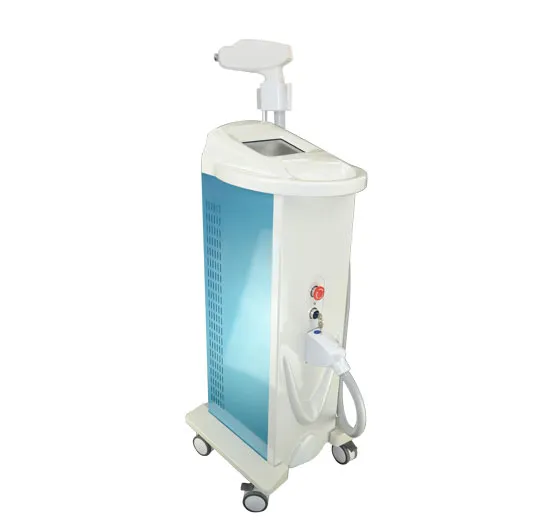
Buying a professional laser hair removal machine in Great Britain? Three decisions land before you spend a pound. Diode or IPL. Single wavelength or multi-wavelength. And how much cooling and repetition rate your diary actually needs. This page works through each one from a UK clinic's side of the counter, so laser safety duties, local licence checks and spare parts lead times all sit in here too.
Diode laser or IPL: pick the tool for the job
For hair, diode is the sharper tool. It fires a concentrated 808 nm beam, and melanin in the follicle absorbs it strongly. Spot size on our diode laser hair removal machine is 12x12 mm². IPL works differently. It puts out a broad spectrum, 430-1200 nm on our IPL machine, which you filter for hair, pigmentation, redness and other treatments. So look at your diary. Mostly legs, underarms and bikini work? Diode is the more comfortable commercial choice. Need one workstation to populate a mixed menu? IPL or an OPT platform earns its keep.
Fitzpatrick skin type matters here. 808 nm diode is used across skin types I to VI, though darker skin types need conservative settings and test patches to reduce post-inflammatory hyperpigmentation risk. IPL's broader spectrum is typically less selective for darker skin. Which means matching the right clients to the right platform is part of the purchasing decision, not an afterthought once the box arrives.
Single 808 nm or multi-wavelength: match your client base
A single-wavelength 808 nm machine keeps things simple. Predictable, too. You get deep penetration into the follicle with less scatter. Multi-wavelength platforms, 755 nm and 1064 nm combined for instance, can be tuned for different skin tones, but they cost more and add settings your team must manage. Most of your clients Fitzpatrick I to IV? An 808 nm diode covers the bulk of your bookings. If your local area skews towards Fitzpatrick V and VI, you may need a 1064 nm channel, so ask the supplier for published skin-type data and test before you commit.
Published comparisons of single-wavelength 755 nm and dual-wavelength 755/1064 nm systems show trade-offs in coverage and selectivity. That's why we ask clinics about their client demographics first, rather than simply selling the machine with the most features.
Cooling and repetition rate decide your daily capacity
Look past the marketing and check two numbers: contact cooling temperature, and repetition rate. Our diode machines hold the sapphire tip at 0-4°C, so you can work at higher fluence without heating the surface. A 1-10 Hz repetition rate means up to ten pulses a second, and a pair of lower legs gets covered quickly. Real-world throughput is another matter. It bends to the client's skin reaction and your operator's pace. A Tuesday-afternoon salon doing back-to-back legs will care about cooling and repetition rate far more than about extra handpieces.
Laser safety in a UK treatment room
You don't improvise this treatment. You need a controlled area with warning signs and interlocks where practical, plus protective eyewear rated for the wavelength in use. The general duty sits in the Health and Safety at Work etc. Act 1974; the requirement for a suitable and sufficient risk assessment comes from the Management of Health and Safety at Work Regulations 1999 reg 3, and it must be recorded in writing once you employ five or more people. Equipment maintenance and operator training records fall under PUWER 1998. Your laser protection adviser or supplier should help you set all this up before the first client sits down.
Is the machine a medical device? Under the UK Medical Devices Regulations 2002 that hangs on the manufacturer's stated intended purpose. Some devices for purely cosmetic use sit outside the definition in Great Britain. Ask the supplier what marking the machine carries, whether it's MHRA registered if applicable, who the UK Responsible Person is, and request a written declaration of conformity. Transitional arrangements still permit CE-marked devices on the GB market for some time, and those deadlines change, so confirm against current MHRA guidance on the day you order. Northern Ireland has separate rules.
Councils, licences and paperwork vary by postcode
There's no single licence rule for laser hair removal across Great Britain. In London, boroughs may apply special treatment licensing under the London Local Authorities Act 1991. Outside London, only some councils hold powers through local Acts or byelaws. Wales runs a national regime for special procedures, but it covers a closed list: acupuncture, body piercing, electrolysis and tattooing. Laser hair removal isn't on that list. Your own council's written reply is the only reliable answer, so email them before you budget for signage and staff.
Spare parts, servicing and the cost of downtime
In the UK, a machine is only as good as the parts pipeline behind it. Ask where parts are held. Ask how quickly a replacement handpiece or water pump can reach your clinic, and whether remote diagnosis is available. A broken diode handpiece can take a week or more if parts are shipped from outside the UK, and that week is cancelled appointments and refunds. Get the delivery time for consumables and critical spares in writing before you buy, then check whether loan units are part of the service contract.
For a machine booked back-to-back, one lost day of bookings is a material cost. Ask your supplier where their UK spare parts sit, before you commit.
Which machine to buy first
Starting out? Choose the 808 nm diode if hair removal is the core service. Buy IPL or OPT only when your diary already shows demand for pigmentation, redness and photorejuvenation alongside the hair work. Our laser hair removal machine buying guide takes the same decision further. This is a call about your revenue mix. Not about which technology lists the longest feature set.
Frequently asked questions
Is a laser hair removal machine a medical device in Great Britain?
Depends on the manufacturer's stated intended purpose. If the device has a medical purpose, UK MDR 2002 may apply. Purely cosmetic use may sit outside it. Ask the supplier for the marking, MHRA registration status if applicable, the UK Responsible Person, and a written declaration of conformity. Transitional arrangements for CE-marked devices continue for a period, so check current MHRA guidance before you order.
Do I need a council licence to offer laser hair removal?
Some London boroughs require a special treatment licence under the London Local Authorities Act 1991. Outside London, only certain councils hold local powers. Wales's special procedures list doesn't include laser hair removal. Your own council's written reply is the only reliable answer, so request it early. Safety paperwork runs alongside the licence question. The general duty sits in the Health and Safety at Work etc. Act 1974; the requirement for a suitable and sufficient risk assessment comes from the Management of Health and Safety at Work Regulations 1999 reg 3, and it must be recorded in writing once you employ five or more people. Equipment maintenance and operator training records fall under PUWER 1998. Laser rooms need a controlled area, suitable eyewear and warning signs, with a laser protection adviser helping you set the detail.
How many clients can one diode machine treat in a day?
Throughput comes down to cooling and repetition rate. A 0-4°C sapphire tip and a 1-10 Hz repetition rate allow fast coverage on legs and underarms, but client comfort, patch testing and operator pace set the real limit. Plan your diary around your slowest service, not the fastest possible pulse.
Sourcing this category?
Send us your target treatments and market — a factory quotation follows within 12-24 hours.