HIFU
High Intensity Focused Ultrasound for SMAS lifting at 1.5mm, 3.0mm and 4.5mm depths - a non-surgical facelift alternative.
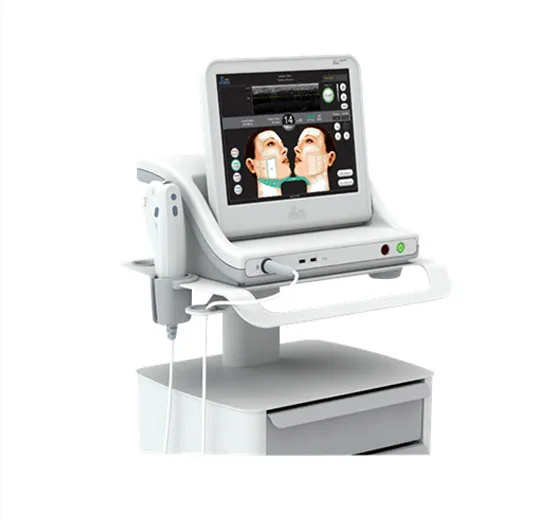
What a HIFU Machine Actually Does in a Great Britain Treatment Room
Shopping for a hifu machine for sale for your Great Britain clinic? Start with how the energy behaves, not with the brochure. HIFU focuses ultrasound into discrete points. Not a wide beam. The energy passes through the epidermis without injuring it, then converges at a chosen depth and creates a thermal coagulation point. That's the opposite of kit that heats the whole dermis. Our machine offers three treatment depths: 1.5mm, 3.0mm and 4.5mm, with an energy range of 0.1-2J.
Nobody sees the full result on the day. Collagen remodelling drives most of the lift, and remodelling is slow. UK clinicians typically book a review at 8 to 12 weeks, not a before-and-after in the same appointment. A client who arrives expecting instant dramatic tightening leaves disappointed, or asks for a refund. Set that timeline at consultation.
Transducer Depth, Cartridge Costs and Your Treatment Menu
Those three depths aren't marketing. They correspond to anatomical planes. 1.5mm targets the superficial dermis and fine lines. 3.0mm heats the deep dermis for firming. 4.5mm reaches the SMAS layer, the one a surgical facelift pulls. You can combine them in one session, though each depth uses a separate transducer cartridge. Cartridges are consumable: fixed shot count, and the software locks when they're exhausted. So your main holding cost isn't the purchase price. It's cost per shot times shots per face.
Deduct the cartridge cost before you set your UK pricing. Then put two dull questions to the supplier: replacement cartridge lead times to Great Britain, and warranty terms. If a transducer fails and a replacement takes three weeks, your revenue stops. That operational risk matters more than a few hundred pounds on the invoice.
HIFU vs RF: How to Decide Which Machine to Buy
RF and HIFU both tighten skin. They answer different complaints. RF heats a larger volume of tissue, usually to 45-65°C, relying on collagen contraction and new collagen. HIFU creates discrete focal points at greater depth without heating the surface. Is your client base mostly age 35-50 with mild laxity and texture concerns? Then an RF machine like our RF skin tightening machine gives you a solid repeat-visit programme. Sagging jawline, jowls, a crepey neck, someone asking for something closer to a non-surgical lift? HIFU is the better fit.
In a UK clinic, the cost per session often reflects the consumable cartridge. HIFU clients may book one or two sessions, while RF clients typically book a course. Cash flow and rebooking shift with that. Neither is objectively better. It comes down to the treatment list you want to sell. Compare the full range in RF and HIFU skin tightening machines.
UK Compliance Checks Before You List HIFU Treatments
Before you advertise HIFU to British clients, confirm the device status with your supplier. Three questions. Does it carry a UKCA mark or a CE mark under current MHRA transition arrangements? Has it been registered with the MHRA? Who is the UK Responsible Person, and can you get a written Declaration of Conformity? Don't rely on a brochure; request copies. Transition periods change, so check MHRA's current guidance on the day you order.
Whether the device counts as medical or cosmetic depends on the manufacturer's stated intended use under UK MDR 2002. Not a medical device? It still has to meet general product safety and electrical safety requirements. Written risk assessments are mandatory under Management of Health and Safety at Work Regulations 1999 reg 3 if you employ five or more people, and equipment maintenance and operator training records fall under PUWER 1998. Your supplier's certificate does not cover your clinic's use. Don't assume it does.
Premises licensing has no blanket national rule. Some London boroughs may require a special treatment licence under the London Local Authorities Act 1991. Outside London, only some councils license special treatments. In Wales, the Public Health (Wales) Act 2017 special procedures list is closed and doesn't include facial aesthetics or body contouring. Ring your own council. Their written answer is the only one that matters. For more on UK device status, see our HIFU buying guide.
Contraindications and Avoid Zones Your Operators Must Know
HIFU isn't just a device. It's a procedure, and it carries specific risks. This list has to appear in your consent form, and every operator needs to screen for it before treatment.
Avoid zones
- Thyroid gland and the anterior neck over it
- Eyes and periorbital area
- Over the carotid arteries or any major superficial vessel
- Areas with metal implants or permanent fillers
- Open wounds or active infection
Client screening exclusions
- Pregnancy (all trimesters)
- Keloid or hypertrophic scarring tendency
- Active skin infection or broken skin in the treatment area
- Implanted electronic device in the treatment area (e.g. cochlear implant, neurostimulator)
- Fitzpatrick IV-VI clients: patch test first and start at lower energy, with documented post-inflammatory hyperpigmentation risk
Expected side effects to put in the consent form
Erythema and oedema are common and settle within days. Ecchymosis, striated swelling, transient numbness or weakness in the marginal mandibular nerve distribution can occur, and are usually reversible. Thin-faced clients carry a higher risk of fat atrophy. Document every adverse event, however minor, in the client record.
Specifications
| Energy Type | High Intensity Focused Ultrasound |
|---|---|
| Treatment Depth | 1.5mm / 3.0mm / 4.5mm |
| Energy Range | 0.1-2J |
| Power | 500W |
| Weight | 20Kg |
Best for
UK clinics and medi-spas selling a non-surgical facelift alternative for sagging cheeks, jawline and neck, plus body tightening.
Buy the RF skin tightening machine instead if you want a lower consumable cost, broader fit for mild laxity and texture, and a repeat-visit course model rather than a higher-ticket structural lift.
Frequently asked questions
How much does a HIFU machine cost in the UK?
There is no fixed UK price. Your total cost includes the machine, replacement transducer cartridges, staff training, insurance, VAT and any import duty. Compare suppliers on total cost of ownership, not the headline figure. Ask for cartridge shot counts and lead times to Great Britain before you commit.
How many sessions will a client need?
Many clinics sell a single session with a review at 8 to 12 weeks. Collagen remodelling continues for months, so a second session is only justified if measurable laxity returns. Book a reassessment at 12 months and rebook only on clinical need. Avoid promising a fixed number of sessions or a permanent result.
Does HIFU need a special treatment licence in the UK?
No national rule exists. Some London boroughs may require a special treatment licence under the London Local Authorities Act 1991. Outside London, only some councils license special treatments. In Wales, the Public Health (Wales) Act 2017 special procedures list does not include facial HIFU. Contact your own council for written confirmation; that is the only reliable answer.
What are the main consumable costs for a HIFU machine?
Transducer cartridges are the main consumable. They have a fixed shot count and must be replaced when depleted. Budget for them per treatment. Also factor in periodic maintenance, insurance and operator training records under PUWER 1998.
Request a quotation
Send your market and configuration needs — the Pmise team replies within 12-24 hours.