RF Skin Tightening Machine
2.64MHz mono-polar and bi-polar radio frequency for skin firming, wrinkle reduction and body reshaping with contact cooling.
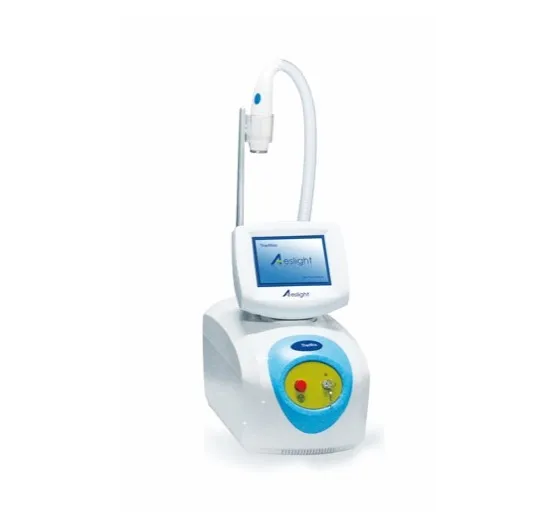
Where the professional rf machine earns its keep
A professional rf machine used in a UK clinic is not a stronger version of a home wand. It delivers controlled heating to the dermis, typically within the 45-65°C window, and holds that temperature long enough for collagen fibres to contract and remodel. Home devices rarely reach or maintain that window. The difference you'll notice in a treatment room is not just power; it's epidermal cooling and real-time temperature feedback, which let you treat at therapeutic depth without asking the client to tolerate surface heat. That is why skin tightening here is a course of treatments, not a single session. If you're weighing this against ultrasound lifting, see our HIFU machine page or the wider RF and HIFU collection. For a sharper comparison against home devices, see our RF skin tightening buying guide.
What monopolar and bipolar change in the treatment room
Bipolar RF passes current between two electrodes in the handpiece, heating shallow tissue quickly, so it suits facial work where you want speed and controlled surface heat. Monopolar RF uses a return electrode and penetrates deeper, gradually heating epidermis, dermis and hypodermis; it's the mode for body tightening and cellulite. The Pmise-R01 integrates both modes at 2.64MHz with up to 120W, and includes 25mm and 45mm tips for each. Multi-polar systems add extra electrodes to widen the field, but the clinical questions stay the same: how deep, how fast, and how much surface heat the client feels. You'll choose mode by the area and the client's tolerance rather than by marketing category.
Contraindications you screen for before switching on
Do not treat a client with any of the following until a qualified clinician has cleared them:
- Cardiac pacemaker
- Implanted cardioverter defibrillator (ICD)
- Other active implanted electronic devices
- Metal implants in the treatment area
- Impaired skin sensation, where the client cannot reliably feel heat
- Pregnancy
- Active skin infection or broken skin in the treatment area
Monopolar RF is specifically contraindicated for pacemaker and ICD patients because the current path can involve the torso. For clients with darker skin tones, there is a higher risk of post-inflammatory hyperpigmentation; do a test patch, document the response, and adjust energy accordingly. This list is not exhaustive; your training and insurance should define the full screening protocol.
UK regulatory checks before you buy
For Great Britain, the first question is whether the manufacturer has declared a medical purpose. If it's a medical device, it falls under UK MDR 2002. If it's cosmetic only, especially Annex XVI type devices, GB law has not yet brought those under the same medical device regime; MHRA reform is still in progress. That does not mean you can skip checks. Ask the supplier: does the device carry UKCA marking or a transitional CE mark, is it registered with the MHRA where required, who is the UK Responsible Person, and can you get a written Declaration of Conformity? Transitional arrangements change, so confirm the position with current MHRA guidance on the day you order. Northern Ireland has its own rules. Also check whether your local council requires a special treatment licence for the treatments you plan to offer, and make sure your employer's health and safety assessment covers the device. If you're importing, read our importing guide for customs and VAT detail.
What it costs to run in a UK clinic
Budget in pounds sterling: the machine purchase is the visible cost, but the running total includes consumables if any, staff training, insurance, and VAT on the invoice if you're not recovering it. If you import, factor in customs clearance and haulage. Ask about warranty length and how quickly parts could reach your clinic if something fails; a low purchase price means little if the supplier cannot put a replacement handpiece in your treatment room within a working week. Don't rely on 'spare parts available' without a lead time. Also account for the time it takes to train each therapist on energy settings, treatment timings and the contraindication screening above; a Tuesday-afternoon salon doing back-to-back legs will feel the difference between a ten-minute training video and a proper practical session.
Specifications
| Technology | Mono-polar & Bi-polar RF (sine wave) |
|---|---|
| RF Frequency | 2.64MHz |
| RF Power | 120W (Max) |
| Treatment Tips | Mono-polar: 25mm/45mm; Bi-polar: 25mm/45mm |
| Working Mode | Continuous & Pulse |
| Cooling | Contact cooling (semiconductor) 0-4°C |
| Rated Power | 320W |
Best for
UK clinics and salons building repeat-visit anti-ageing programmes with skin firming, wrinkle reduction and body reshaping using mono-polar and bi-polar RF.
Choose a different machine if you need SMAS-depth lifting (see HIFU) or if your treatment list is purely superficial facial work with no body tightening.
Frequently asked questions
Do I need a medical device registration to offer RF skin tightening in Great Britain?
It depends on the manufacturer's declared intended purpose. If it's a medical device, UK MDR 2002 applies; if it's a cosmetic-only device, especially Annex XVI type devices, GB law has not yet brought those under the medical device regime, but MHRA reform is ongoing. Ask the supplier for the device's marking, MHRA registration status, UK Responsible Person and a written Declaration of Conformity. Check current MHRA guidance on the day you order because transition periods change. Northern Ireland has different rules. Your local council may also require a special treatment licence.
Is a single RF session enough for a client?
No. RF works by heating collagen to a window where it contracts and then remodels over weeks. A professional skin tightening machine is booked as a course, usually several sessions spaced apart, with maintenance after. Results build gradually; advertising outcomes as a one-off would misrepresent the mechanism.
Can I treat clients with pacemakers or ICDs?
No. Monopolar RF is contraindicated for clients with cardiac pacemakers, implanted cardioverter defibrillators (ICDs) or other active implanted electronic devices. You must screen for these before treatment. Also exclude clients with metal implants in the treatment area, impaired skin sensation, pregnancy, or active skin infection or broken skin.
What about clients with darker skin tones?
They can be treated, but the risk of post-inflammatory hyperpigmentation is higher. Do a test patch on a discreet area, document the reaction, and start with conservative energy settings. Monitor the skin during treatment and adjust based on the client's feedback and visible response.
Request a quotation
Send your market and configuration needs — the Pmise team replies within 12-24 hours.