OPT Laser
Optimal Pulse Technology (OPT) square-wave pulses for painless hair removal plus skin rejuvenation, pigment and vascular treatment on one platform.
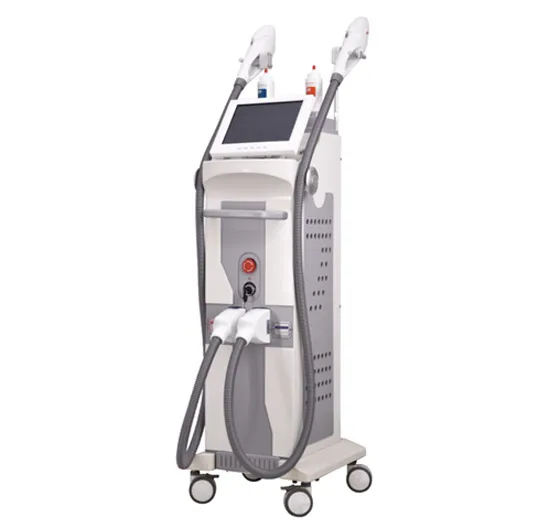
What OPT actually is
An OPT machine is a square-wave variant of IPL; OPT is short for Optimal Pulse Technology. Instead of the sharp energy spike you get with a traditional IPL pulse, OPT flattens the waveform so every sub-pulse carries the same energy. That matters in a British clinic because it shifts the safety calculation: you get a predictable dose per pulse, which makes outcomes more repeatable between operators and between visits. It's not a new equipment class, so the buying question is not 'OPT or IPL?' but 'which square-wave IPL machine fits our treatment menu?'.
Why the square wave matters for your safety margin
Traditional IPL emits a high-energy spike on the first pulse and then decays. The spike is where epidermal burns tend to happen, and the decaying tail adds heat without adding benefit. Square-wave pulses avoid that by keeping fluence stable. On this platform, fluence is set between 1 and 50 J/cm² across an 8 by 40 mm spot, with pulse widths from 1 to 9.9 ms. The high repetition rate (up to 10 Hz) applies only to low-fluence sliding SHR mode; single-shot treatment at the top of the fluence range runs far slower. A repeatable waveform makes it easier to train staff, document settings, and audit outcomes.
Filters decide what you can treat
An OPT machine's treatment menu depends on the filters in the drawer. The four common indications need different wavelength bands: 610-1200 nm for hair removal, 585-1200 nm for vascular redness, 530-1200 nm for skin rejuvenation, and a 560 nm band for superficial pigmentation. A machine sold with only one filter is a much narrower purchase than the spec sheet suggests. Ask for a quotation that lists every filter included as standard, and every filter sold as a paid extra.
Operator training and your safety duties
You and every client must wear protective eyewear matched to the machine's broad-spectrum output during any emission. Check the goggles carry EN 207 or EN 208 markings suitable for IPL, and schedule them as consumables, not permanent fixtures. Your written risk assessment (five or more employees) should name the person responsible for checking eyewear before each session.
Screen clients before their first appointment. Do not treat anyone with an active infection in the treatment area, anyone currently taking isotretinoin or within the advised washout period, anyone with recent sun exposure or artificial tanning in the area, anyone pregnant, or anyone with a history of flash-induced seizures. Treat with caution, and only after documented assessment, clients taking photosensitising medicines (including some antibiotics, diuretics and St John's wort), clients with a history of cold sores in the treatment area (offer prophylactic cover), clients with tattoos or atypical pigmented lesions in the field, and clients with Fitzpatrick skin types IV to VI. A test patch is mandatory before a first course.
Where an opt machine sits in your treatment menu
OPT is a waveform variant of IPL rather than a separate equipment class, so compare it against the IPL and diode options rather than treating it as a third category. If you want one platform for facial rejuvenation, pigmented lesions, vascular redness and light hair removal, an opt machine works , provided the quotation includes the filters for every indication on your list. For a clinic doing mostly dark, coarse hair removal, a diode laser may serve better long term. If you are still deciding between the two, our IPL buying guide and diode versus IPL comparison are the next places to look.
Budgeting in pounds
The machine price is the smallest part of the commitment. Add import VAT if you buy from outside Great Britain, CRATE handling, delivery to room, staff training days, annual insurance, replacement flash lamps, optical filters, and service call-outs. Confirm net and crated weight, crate dimensions and whether delivery is kerbside or to-room before you order , floor-standing platforms often will not clear a domestic lift or a narrow treatment-room door. Ask the supplier how long a lamp or filter takes to reach your postcode when you order one as a spare.
When to buy a different machine instead
Buy a diode laser if your booking sheet is mainly Fitzpatrick IV to VI clients or you need faster large-area hair removal. Buy a standard IPL machine if you want the simplest possible control panel and are comfortable with traditional pulse waveforms. Buy neither until you have confirmed the Declaration of Conformity, the UK Responsible Person, and MHRA registration status for the exact model you are importing on the day you place the order.
Specifications
| Wavelength | 530-1200nm (640-1200nm option) |
|---|---|
| Energy Density | 1-50J/cm² |
| Spot Size | 8x40mm (10x50mm option for hair removal) |
| Pulse Width | 1-9.9ms |
| Frequency | 1-10Hz |
| Operating Mode | HR / PR / SR / Vacuum |
| Cooling System | Air + Semiconductor + Water |
| Weight | 35-65Kg (by model) |
Best for
A clinic that wants one square-wave IPL workstation for light hair removal plus rejuvenation, pigment and vascular treatments, provided the filter set matches the menu.
A clinic whose core business is darker skin hair removal or high-volume laser hair removal should buy a diode laser instead.
Frequently asked questions
Is an OPT machine a laser?
No. OPT is a square-wave IPL system: it emits filtered broad-spectrum light, not monochromatic laser light. Some suppliers list it under laser ranges, so confirm the emission type on the Declaration of Conformity before you buy.
Do I need any special licence for an IPL machine in Great Britain?
Only your own local authority can answer that. Some London boroughs have a licensing scheme under the London Local Authorities Act 1991. Outside London, a few councils act under local byelaws. In Wales, the special procedures rules cover only acupuncture, piercing, electrolysis and tattooing. Ask your council in writing.
What documents should I check before buying an OPT machine?
Ask for a Declaration of Conformity, confirmation of the UK Responsible Person, evidence of MHRA registration if the device has a medical intended purpose, and a written quote listing included filters and their wavelength bands. Check the supplier's UK service response time in writing, not just the warranty length.
How does OPT compare with diode laser for hair removal?
OPT (square-wave IPL) is gentler on light skin and suits clinics offering mixed skin treatments, but it is slower on coarse hair and less effective on darker skin tones than a diode laser. A diode delivers monochromatic light at a wavelength chosen for melanin, so it achieves better results on dark hair with fewer sessions.
Request a quotation
Send your market and configuration needs — the Pmise team replies within 12-24 hours.